
Loading...
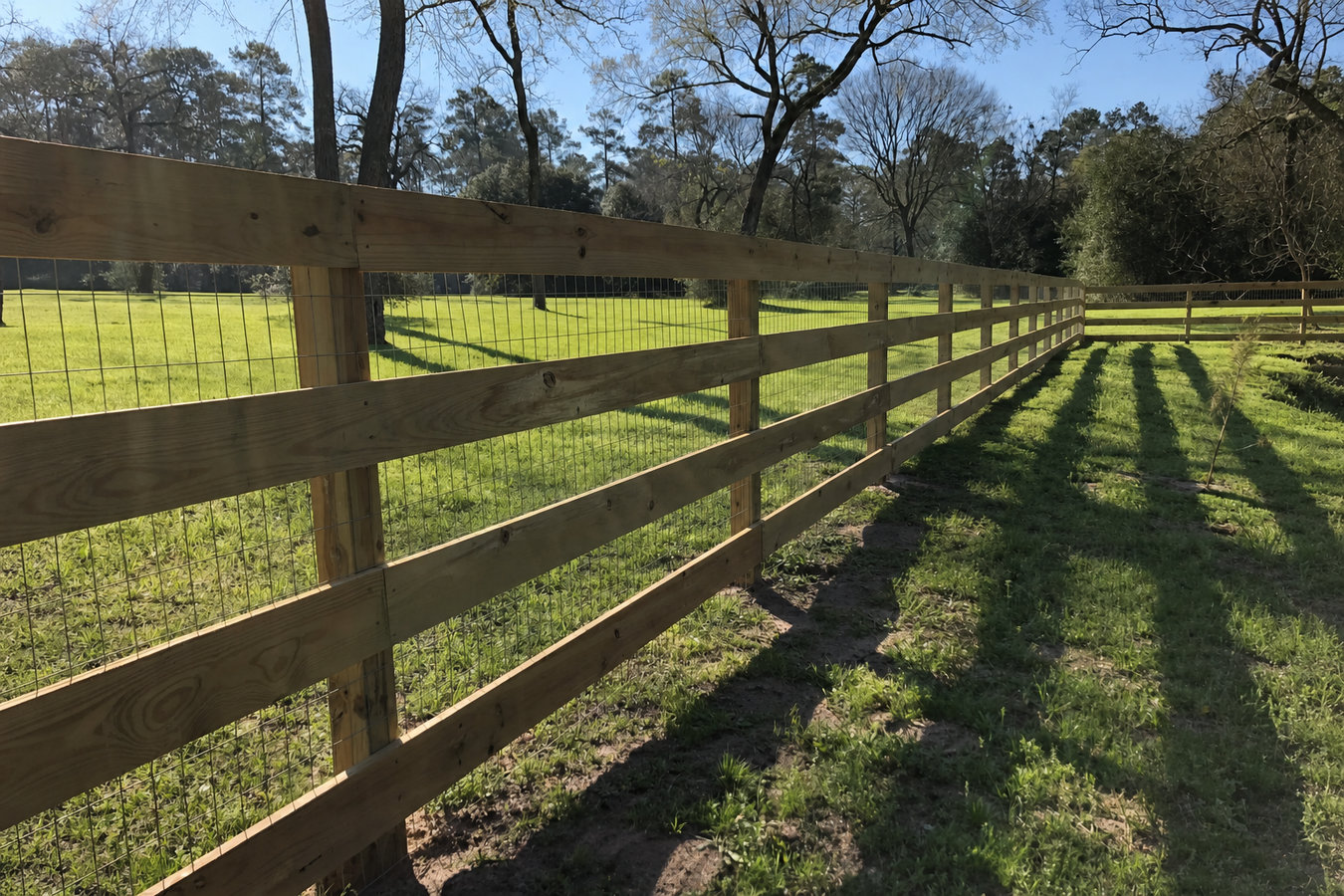
Running animals on a Peninsula property means dealing with clay soil, coastal moisture, and hillside terrain. We install farm and ranch fencing that holds up to all of it - and keeps your animals where they belong.
Farm and ranch fencing in San Bruno, CA covers woven wire livestock enclosures, post-and-rail paddocks, and large perimeter runs for hobby farms and horse properties, with most installations completed in one to four days depending on the size and terrain. Projects here tend to be smaller in scale than traditional open-range operations, but they still require the same quality of installation - because clay soils, coastal fog, and hillside grades put real stress on any fence that is not built correctly.
San Bruno and the surrounding San Mateo County hillsides have pockets of semi-rural land where property owners keep goats, chickens, horses, and other animals on lots that were never designed for farm use. That means the fencing often needs to do more work than a standard residential fence - it has to contain determined animals, hold tension through wet winters, and stay upright in soil that expands and contracts with the seasons. If you are also thinking about a gate for vehicle access, our chain link fence installation page covers perimeter options that work well alongside farm fencing.
We offer free on-site estimates. Call (650) 309-1513 and we will get back to you within one business day.
Look for these warning signs before an animal gets through or a neighbor has a complaint.
Walk your fence line and push gently on each post. If it wobbles, leans, or shows dark soft wood at the soil line, the post is failing. In San Bruno's damp coastal climate, wood post rot at the base is one of the most common reasons farm fences need replacement - moisture works its way in over years, and once the base goes, the whole post loses its holding power.
A fence that has lost tension sags between posts, and gaps near the ground are an open invitation for smaller animals to escape or predators to get in. If you can see daylight under the bottom wire or the fence bows outward in sections, the fence is no longer doing its job and needs attention before an animal gets through.
A gate that drags, will not latch, or hangs at an angle is a sign that either the gate post has shifted or the hardware has worn out. In San Bruno's clay-heavy soils, gate posts can shift seasonally as the ground swells with winter rain and dries in summer. A gate that does not close securely is a safety risk for animals and a security risk for your property.
Older hillside properties in the San Bruno area sometimes have fencing installed decades ago that no longer matches current property lines or has deteriorated to the point of being more suggestion than barrier. If you are not sure where your fence line is or whether the existing fence is still functional, a contractor can walk the property with you and help you understand what needs to be replaced.
We build livestock enclosures, paddocks, pasture perimeters, and large property runs for hobby farms and semi-rural properties throughout San Bruno and the Peninsula. Every project starts with a site walkthrough - we walk the fence line, measure the total length, check the soil conditions, note slopes and obstacles, and ask what animals you are keeping. The fence type and post depth we recommend depends on all of that. For properties near the Bay or in areas with wet clay soil, we recommend pressure-treated posts rated for ground contact, galvanized wire, and concrete footings as the standard - not an upgrade - because the moisture here eats through the wrong materials faster than most property owners expect.
Corner and gate posts are the backbone of the whole fence. We set them in concrete with diagonal bracing because a corner post that fails takes the tension out of everything connected to it. Gates get the same attention - we plan placement, width, and swing direction before any posts go in, so your tractor, trailer, or livestock can move through without a problem. For properties where animal containment is the main concern, our pet and dog fencing service and chain link fence installation are worth comparing depending on the animal size and the perimeter involved.
The go-to choice for goats, sheep, and small livestock - tight bottom spacing keeps smaller animals contained and predators out.
Classic wood or vinyl rail fencing suited for horses and properties where appearance matters alongside function.
A low-profile, long-lasting option for large perimeters - especially horses, where smooth wire with some give is safer than barbed.
Set in concrete with proper bracing - the foundation that keeps tension across the whole fence line through wet winters and dry summers.
Sized for tractors, trailers, and whatever you need to move through - planned before posts are set, not after.
Galvanized wire and pressure-treated posts matched to San Bruno's fog and moisture conditions so the fence lasts decades, not years.
San Bruno is a densely developed city, but the hillside areas above the flatlands have a real mix of residential and semi-rural parcels where property owners keep animals and need serious fencing. The challenge is that those properties come with Bay Area conditions: clay-heavy soil that swells when wet and shrinks when dry, coastal fog that adds persistent moisture even in summer, and slopes that make straight fence lines impossible. Wood posts set in clay without concrete footings will shift. Wire stretched without enough tension will sag within a season. A fence installed without accounting for slope may look fine from a distance but leave gaps an animal can push through. The UC Cooperative Extension provides research-backed guidance on small farm fencing and livestock containment that informs how we spec materials and post depth for this region.
We have worked on farm and ranch fencing projects throughout this part of the Peninsula, including in Pacifica and Brisbane, where hillside terrain and coastal moisture create the same combination of challenges as in San Bruno's upper neighborhoods. Before any digging begins, we contact California 811 to have underground utilities marked - it is required by state law and protects your gas lines and water service from accidental damage during post-hole work.
We respond within one business day. We will ask about the animals you are keeping, a rough sense of how much area you want to enclose, and any specific concerns like slopes, existing fencing, or soil conditions. We do not give phone quotes - the price depends too much on what is actually on your property.
We visit your property to walk the fence line, measure the total length, check the soil, note slopes and obstacles, and identify where gates need to go. You get a written estimate that breaks down materials, labor, gate hardware, and permit fees - the number you agree to is the number you pay.
Before any post holes are dug, we contact California 811 to have underground utilities marked. Depending on the project scope and your property's zoning, a permit may also be required through the City of San Bruno - we handle that process for you.
Corner and gate posts go in first, set in concrete with time to cure before wire is stretched. Line posts follow, then wire or rails, then gates. We walk the finished fence with you before leaving - checking tension, gate swing, latch function, and overall alignment - so you can point out anything that does not look right while we are still on site.
We walk your land, measure real conditions, and give you a quote you can count on - not a phone estimate that balloons once work starts. Call or submit your info and we will respond within one business day.
(650) 309-1513Corner posts are where fence lines fail first. We set them in concrete with diagonal bracing because the constant pull of stretched wire demands it. A corner that shifts pulls the tension out of every panel attached to it - we build corners that stay put through San Bruno's wet winters and clay soil movement.
San Bruno's coastal fog is persistent, and untreated wood posts in this climate can begin rotting at the soil line within a few years. We specify pressure-treated lumber rated for ground contact, galvanized wire, and coated hardware as the standard on every farm fence job here - not the premium option, the starting point.
A significant share of farm fencing in this area goes on sloped lots where posts cannot be spaced evenly and wire has to follow the terrain. We have installed fencing on hillside properties throughout San Bruno and the surrounding areas - experience that matters when the fence line is not a straight shot across flat ground.
One of the most common complaints about fencing contractors is quotes that grow once work starts. Our estimates break down materials, labor, gate hardware, and any permit fees in writing before you commit. The number you agree to is the number you pay.
Farm fencing on a Bay Area property requires more planning than a standard residential fence - the soil, the moisture, the terrain, and the animals all factor in. We bring that understanding to every job, and we stand behind the work after we leave.
For smaller animals or residential lots where farm-grade fencing is more than you need, our pet fencing options keep dogs safely contained.
Learn MoreChain link is a cost-effective option for enclosing larger areas where livestock containment is not the primary concern.
Learn MoreClay soil and wet winters are hard on fences that are not built right - the sooner we can walk your property and get a written quote, the sooner your animals are properly enclosed. Call or reach out online today.